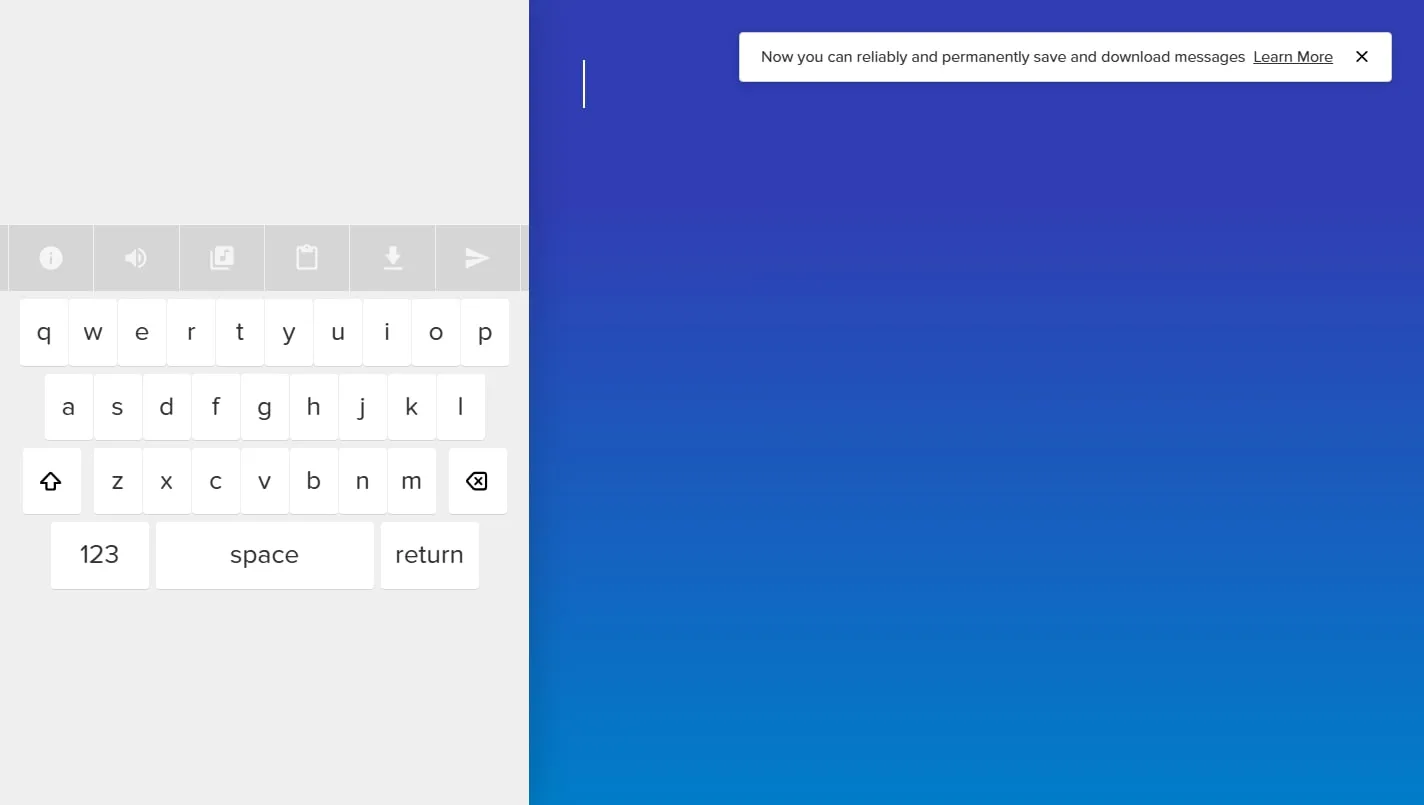
Typatone maps letters to musical notes, so ordinary writing produces a repeating composition as it appears on screen. It is less a conventional sequencer than a playful way to hear rhythm and repetition hiding inside language.
Write before composing
Start with a real sentence instead of trying to place notes deliberately. Repeated letters, spaces and punctuation create a pattern with its own phrasing, and editing the language becomes an unusual form of musical arrangement.
Compare the shape of language
Try short lists, names, a repeated line or text in different languages. The fixed letter-to-note mapping makes changes easy to hear, while the visual trail helps connect a musical event back to the character that caused it.
Keep expectations playful
Typatone is designed around one strong constraint rather than the control of a full instrument. Use it to discover a motif, make a small message or study an interaction idea, then move elsewhere if you need precise timing and production tools.
Things to know
- It offers much less control than a conventional music sequencer.
- Sound depends on browser autoplay and device audio settings.
- Long passages can become repetitive and difficult to edit musically.