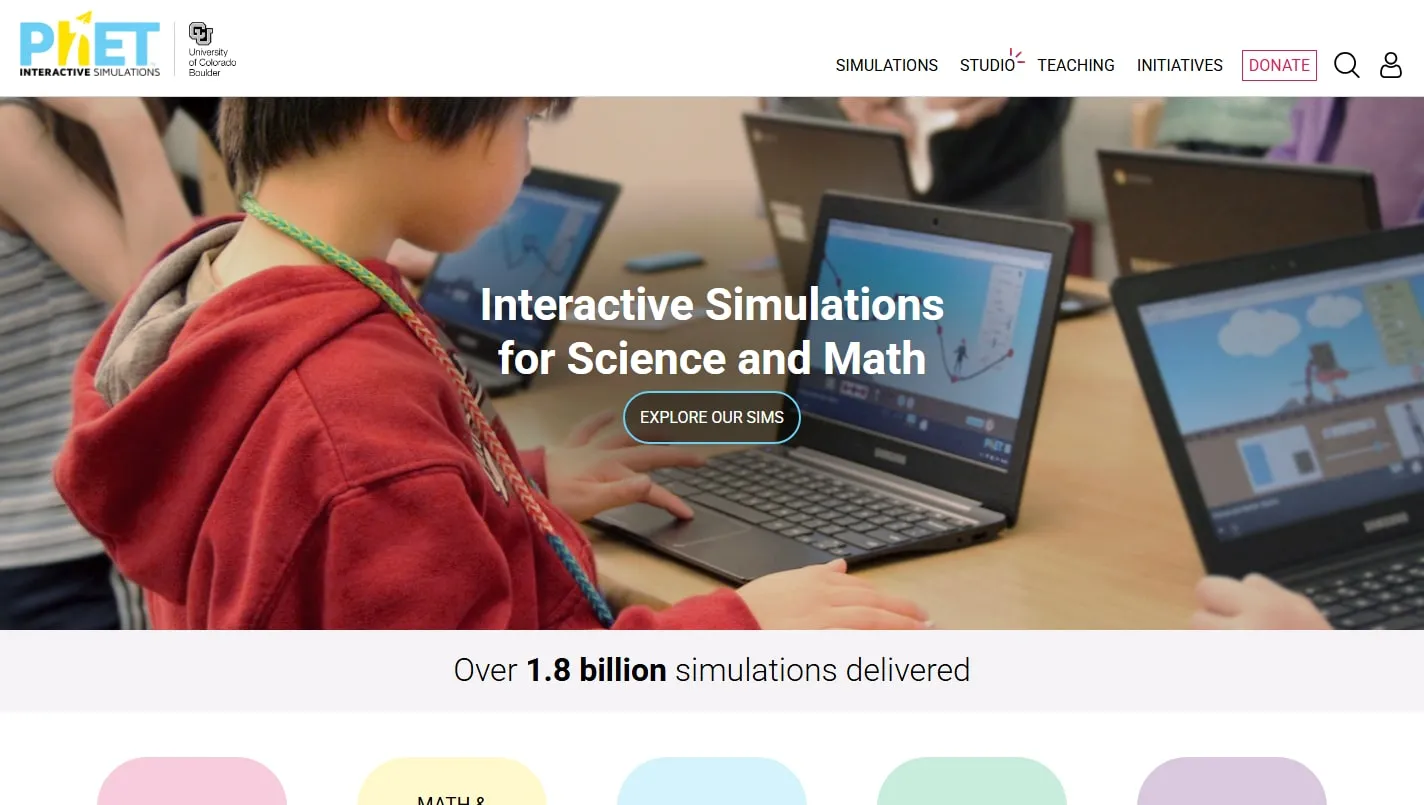
The University of Colorado Boulder’s PhET collection lets learners manipulate models across physics, chemistry, mathematics, earth science and biology. Sliders, measuring tools and immediate visual feedback make invisible relationships easier to test.
Pick the question before the simulation
Browse by subject and choose a model that matches one concept you want to investigate. Make a prediction before moving a slider or adding an object, then use the immediate response to decide whether the original explanation still holds.
Measure rather than only watch
Many simulations provide rulers, stopwatches, voltmeters or graphs. Use those instruments to record a few results and compare cases, turning an attractive animation into a small repeatable experiment with evidence.
Use it with teaching, not instead of it
PhET describes its simulations as flexible tools for inquiry. A clear learning goal and a thoughtful prompt matter more than step-by-step clicking instructions, especially when a model can support several different concepts.
Things to know
- A simulation simplifies reality and does not replace physical laboratory work.
- Some older simulations rely on legacy technology or downloads.
- The collection’s breadth can make choosing the right starting activity difficult.